Wedding Photography
Wedding photography and film across India
Candid coverage and a cinematic film of the whole wedding, from one crew.
In short
Flying Pixel Studio photographs and films weddings across India and abroad. A typical wedding is covered by a two-photographer team plus a cinematographer, shot candidly rather than posed, and delivered as an edited album and a cinematic film. Aerial footage is flown by the same crew where the venue and airspace allow, so nothing is subcontracted.
Most couples come to this page trying to answer three things at once: what candid coverage actually means, how many people need to be there, and what it will cost. This page answers all three in order, and the FAQ at the bottom covers the questions that come up once a date is being held.
What candid wedding photography actually means
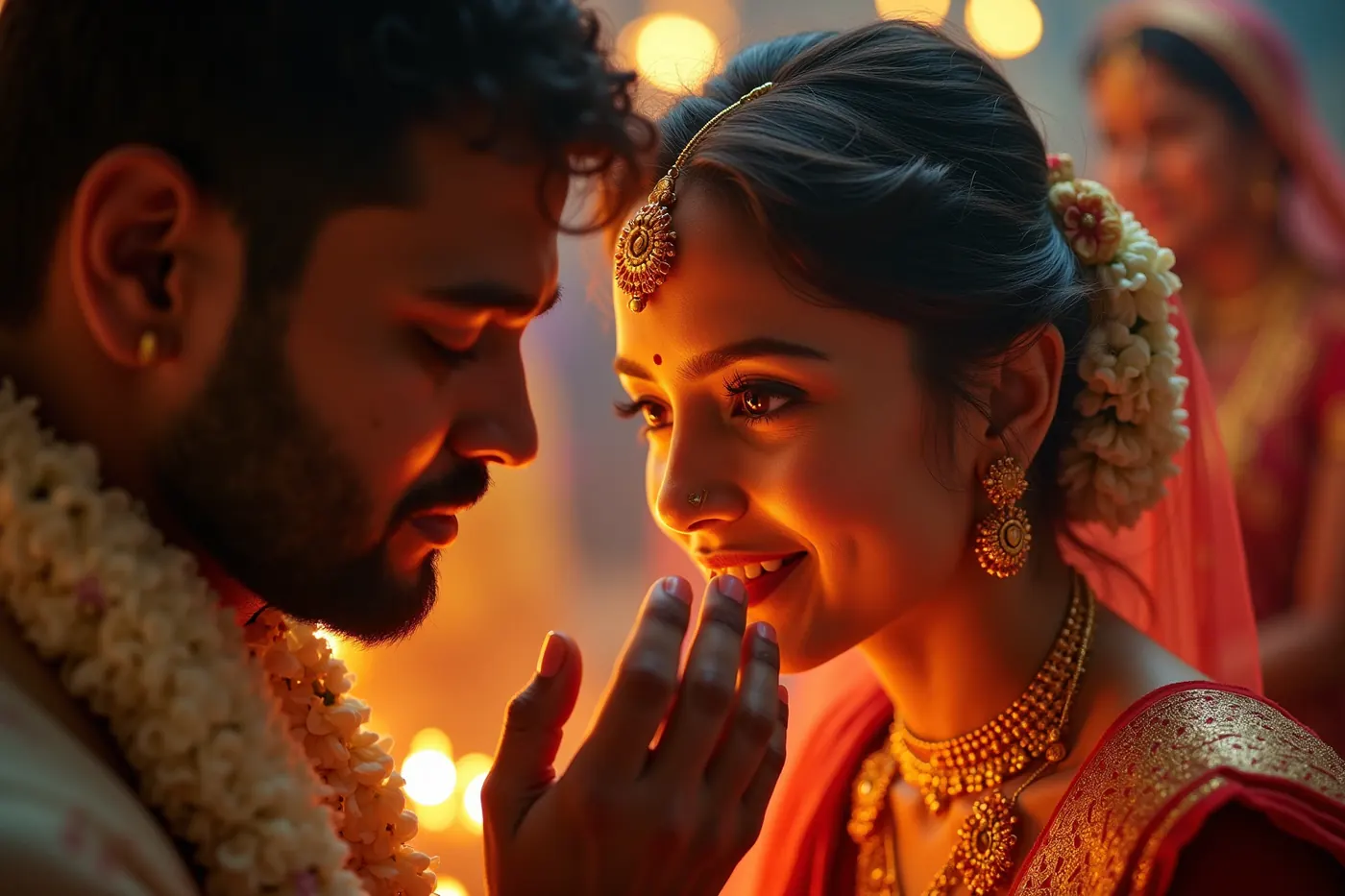
Candid wedding photography means photographing what happens rather than arranging it. The photographer works the room looking for real moments: a mother watching her daughter get ready, a grandfather laughing at something off camera, the second the couple see each other. Nobody is asked to stop and look at the lens.
It is not the opposite of portraits. Almost every wedding still needs a family group set, because those are the photographs the previous generation actually wants on a wall. The difference is proportion. A candid-led wedding might be eighty per cent observed moments and twenty per cent arranged, where a traditional approach reverses that.
The practical consequence is staffing. Observed coverage needs someone free to watch rather than someone occupied setting up groups, which is why candid coverage is almost always shot by at least two photographers working different parts of the room.
Observed, not directed
The photographer positions and waits rather than asking people to repeat a moment for the camera.
Two angles at once
One photographer on the couple, one on reactions, so the moment and the response to it are both captured.
Available light first
Flash is used where it has to be, not by default, because it changes how a room feels and warns people they are being photographed.
Groups still happen
A structured family list is shot at a fixed point in the day, usually straight after the ceremony while everyone is still together.
What a full wedding day of coverage includes
A full day usually runs from bridal preparation through to the first hour of the reception, which is around ten to twelve hours on the ground. The exact shape depends on how many functions are in the same day and how far apart the venues are.
Travel between venues is the part most couples underestimate. If getting ready, the ceremony and the reception are in three different places across a city, an hour of the day disappears into cars, and that hour has to be planned for rather than absorbed.
We build the timeline with you before the day, working backwards from the ceremony and the sunset. Sunset matters more than anything else on the schedule, because couple portraits in good light take fifteen minutes and the same portraits after dark take an hour and look worse.
Getting ready
Both sides where the locations allow it, covering the detail shots, the family and the last quiet hour before it starts.
The ceremony
Covered from at least two positions, with lens choices agreed against whatever the venue or the priest restricts.
Family groups
A named list worked through efficiently, usually twenty to thirty minutes, immediately after the ceremony.
Couple portraits
Scheduled against sunset rather than against the programme, because the light decides how these look.
Reception
Entrance, speeches, first dance and the first hour of dancing, which is where the energy of the night actually shows.
How many photographers a wedding actually needs
Two photographers is the working minimum for an Indian wedding, and most weddings over two hundred guests need a third. The reason is simple arithmetic rather than upselling: one person cannot be at the groom's preparation and the bride's at the same time, and cannot shoot the ceremony wide and close simultaneously.
A single photographer works for a small registry ceremony or an intimate gathering under fifty people in one location. Past that, coverage starts having holes, and the holes are always in the same places: reactions during the ceremony, and everything happening at the edges of the room.
Cinematography is a separate discipline and a separate person. A photographer holding a video camera is doing neither job properly, because the two require different positions, different timing and different attention.
Lead photographer
Owns the couple, the ceremony coverage and the family list, and is the person you deal with on the day.
Second photographer
Covers the other preparation location, reactions during the ceremony, and the parts of the room the lead cannot see.
Third photographer
Added above roughly two hundred guests, or where functions run in parallel in different halls.
Cinematographer
Films rather than photographs. Separate person, separate kit, because doing both at once compromises both.
What you receive, and when
You receive an edited set rather than everything the cameras recorded. A full Indian wedding day generates several thousand frames, and most of them are duplicates, blinks and half-formed moments. Culling those is the work, and handing over an unsorted gallery moves that work onto you.
A typical full-day wedding delivers somewhere between six hundred and nine hundred edited photographs. The number varies with how many functions were covered, not with effort, so a two-function day delivers fewer images than a four-function one and that is the correct outcome rather than a shortfall.
Turnaround is agreed in writing when you book. A preview set of thirty to fifty images goes out within a week so you have something to share while people are still asking, and the full set and album follow on the agreed date.
Preview set
Thirty to fifty edited images within a week, chosen so you can post and share while the wedding is still current.
Full edited gallery
Colour corrected and culled, delivered as high-resolution files with a web-sized set for sharing.
Designed album
A designed layout rather than a dump of images into a template, with one round of revisions included.
Wedding film
A short film for sharing plus a longer cut, delivered separately from the photographs because the edit takes longer.
Raw files
Available on request. The capture is yours, though most couples work from the edited set.
What actually drives the cost of wedding photography
Cost follows the shape of the wedding rather than a fixed rate. Six things move the number, and knowing which ones apply to you is the fastest way to get a quote that means something.
The largest single factor is how many functions you want covered. A wedding day alone and a four-function wedding with mehndi, haldi, sangeet and reception are different amounts of work by a factor of three or more, and no package price covers both honestly.
The second is crew size, which follows guest count and venue layout as described above. After that it is travel, the deliverable list, how quickly you need it, and whether aerial coverage or a drone show is part of it.
Number of functions
The single biggest driver. Each additional function is another crew, another day and another edit.
Crew size
Set by guest count and how many things happen at once, not chosen to fill a package tier.
Travel and stay
Out-of-city and destination work carries travel and accommodation, quoted separately and agreed before booking.
Deliverables
Album size, whether you want a film as well as photographs, and how many physical copies.
Turnaround
A compressed delivery date means dedicated edit time, which is a real cost rather than a surcharge.
Aerial and drone show
Aerial coverage needs a certified pilot and venue permission. A drone light show is a separate production entirely.
How to choose a wedding photographer
Ask to see one complete wedding rather than a portfolio. A portfolio is the best twenty frames from four years of work, and every photographer has twenty good frames. A full gallery from a single wedding shows you what an ordinary day with them actually looks like, including the parts that were badly lit and went wrong.
Ask who is actually shooting your wedding. In a lot of studios the person you meet is not the person who turns up, and the work you were shown was not shot by the crew you get. Get the name of the lead photographer written into the contract.
Then ask the practical questions that only matter when something goes wrong: what happens if the lead is ill, whether the cameras record to two cards at once, how long the files are kept, and what the timeline is if the delivery date slips.
See a full gallery
One complete wedding start to finish, not a highlights reel assembled from many.
Name the lead in writing
The person shooting your wedding should be named in the contract, not assigned later.
Ask about backup
Dual card recording, backed up the same night, and a named substitute if the lead cannot attend.
Check the delivery date
A date in the contract, not an estimate. Ask what happens if it is missed.
Meet them
This person is beside you for twelve hours on a stressful day. If the conversation is awkward now, it will be worse then.
Booking, contracts and what happens if something goes wrong
A date is held against a signed agreement and a booking amount. Until both exist the date is available to anyone else asking, which is worth knowing if you are comparing quotes over several weeks during a busy season.
The agreement should name the lead photographer, the functions covered, the crew size, the deliverable list, the delivery date and the cancellation terms. If any of those are missing, the thing you are comparing between two quotes is not the same thing.
Every camera we shoot on records to two memory cards simultaneously, so a card failure loses nothing. Files are copied off and backed up to two separate locations the same night, before anybody sleeps. That is the part of the process nobody asks about until it is the only thing that matters.
Recent work
What the coverage looks like
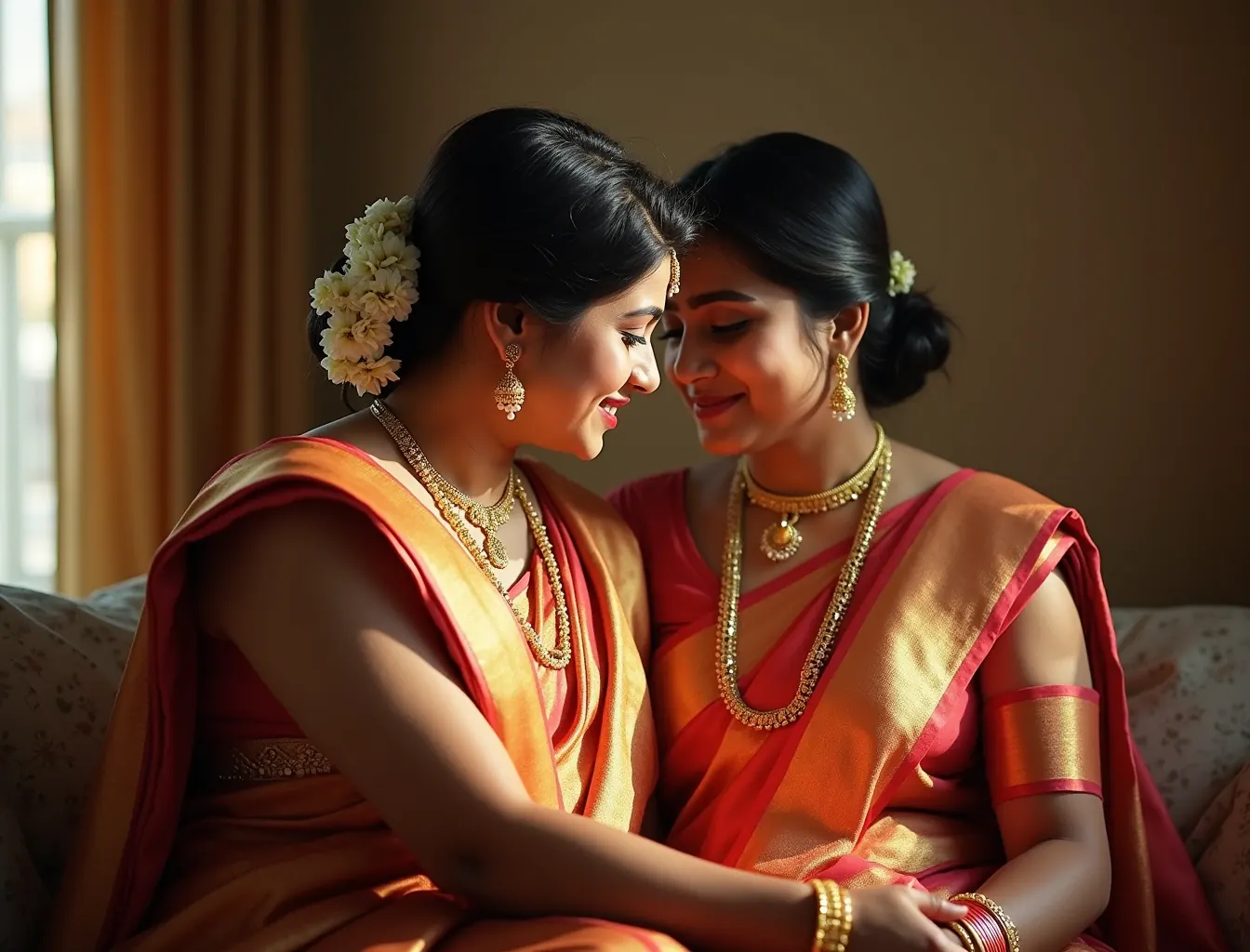
Couple portraits scheduled against sunset rather than against the programme.
Checking availability for your date?
Tell us the date, the city and which functions you want covered. We reply within one business day with availability and what a package for it looks like.
Candid, traditional or both
These are the three ways a wedding gets covered, and most couples end up wanting a mix. The honest comparison is about what each one is good at rather than which is better.
| Candid | Traditional | Both together | |
|---|---|---|---|
| What it captures | Real moments as they happen | Arranged portraits and formal groups | Observed coverage plus a structured group list |
| Direction given | Almost none | Continuous, the photographer runs the room | Directed only for the family set |
| Best for | Emotion, reactions, the feel of the day | Family records, older relatives, wall portraits | Most Indian weddings |
| Crew needed | Two or more, so someone is always watching | Can work with one | Two or more |
| Risk | Fewer formal group shots unless planned | Misses the unguarded moments while posing | Needs a timeline, or the group set eats the sunset |
| What we default to | Yes, as the base | Included as a named list | This, unless you tell us otherwise |
Where we shoot
Flying Pixel Studio shoots across India and travels for destination weddings. Travel and accommodation for out-of-city work is quoted separately and agreed in writing before booking, so it never appears as a surprise line afterwards.
- Mumbai
- Delhi NCR
- Bengaluru
- Hyderabad
- Pune
- Ahmedabad
- Chennai
- Kolkata
- Jaipur
- Udaipur
- Goa
- Surat
Destination weddings shot in:
- Thailand
- Dubai
- United States
- United Kingdom
- Europe
- Australia
- Singapore
- Japan
FAQ
Wedding Photography: questions couples actually ask
If your question is not here, ask it in the enquiry form and a surveyor will answer it.
What is candid wedding photography?
Candid wedding photography means photographing what happens rather than arranging it. The photographer watches and waits instead of directing, so the images are of real reactions rather than people looking at the lens. Most weddings still include a structured family group set, because those are the photographs the previous generation actually wants. The difference is proportion, not the absence of portraits.
How many photographers do I need for my wedding?
Two is the working minimum for an Indian wedding, and above roughly two hundred guests most weddings need a third. One photographer cannot cover both preparation locations, or shoot the ceremony wide and close at once. A single photographer works for an intimate gathering under fifty people in one venue, and past that the coverage starts having predictable gaps.
How many photos does a wedding photographer give?
For a full day covering preparation through reception, expect somewhere between six hundred and nine hundred edited photographs. The number tracks how many functions were covered rather than how hard anyone worked, so a two-function wedding delivers fewer than a four-function one. You receive an edited set rather than every frame the cameras recorded.
Is 500 photos enough for a wedding?
For a single-function wedding day, yes, comfortably. Five hundred edited images from one day is a full record once duplicates, blinks and near-identical frames have been culled. For a multi-function Indian wedding covering mehndi, haldi, sangeet and the wedding itself, five hundred across all of them would be thin, and you should expect several hundred per function.
How much does wedding photography cost in India?
Flying Pixel Studio packages start at ₹2 lakh and run to ₹25 lakh. Where you land depends on how many photographers, cinematographers and drones the wedding needs, and that follows your guest count, your function list and whether it is a destination wedding. Travel and albums are charged over and above. Send us the dates and the function list for a real figure.
What is the average cost of wedding photography in India?
There is no reliable national average, and the figures circulating online are worth treating carefully: the most quoted one comes from a survey of twenty-three photographers that its own publisher describes as informal and unverified. Our packages run from ₹2 lakh to ₹25 lakh, and we scope against your actual function list, guest count and city rather than a rate card.
What moves a wedding package from ₹2 lakh to ₹25 lakh?
Team size and equipment, and both follow the wedding rather than a tier list. More guests means more photographers and cinematographers, because coverage gaps scale with the size of the room. More functions means more days. A destination venue adds travel, and drones add both crew and permission work. A compact single-venue wedding sits near the floor of that range.
How much should I spend on wedding photography?
Work from what the coverage needs to be rather than from a percentage. Our packages start at ₹2 lakh, which covers a smaller wedding with a compact crew, and reach ₹25 lakh where the guest count, the number of functions and a destination venue all push the team and equipment up. Tell us the range you have in mind and we will say honestly what fits.
How far in advance should I book a wedding photographer?
Six to nine months for a wedding in peak season, which in most of India means November through February. Good crews are booked out on the popular dates well before that. Off-season and weekday weddings have more availability at shorter notice. If your date is already fixed, ask about availability early even if you are not ready to book.
Do you cover the whole wedding or just the wedding day?
Whichever you book. Most couples cover mehndi, haldi, sangeet, the wedding and the reception, and each function is quoted as its own day of coverage because that is what it is. Covering only the wedding day is entirely normal too, particularly where the other functions are small or family-only.
What happens if the photographer is ill on the day?
A named substitute of equivalent experience attends, and you are told as early as we know. This should be written into your agreement with any studio you book, along with who that substitute would be. A contract that does not address it is one you should ask about before signing.
How are the photographs backed up?
Every camera records to two memory cards at the same time, so a single card failure loses nothing. Files are copied off and backed up to two separate locations the same night, before anyone sleeps. Card failures are rare and irreversible, which is why the redundancy runs from the moment of capture rather than starting when we get home.
How long does it take to get the photos?
A preview set of thirty to fifty edited images goes out within a week, so you have something to share while people are still asking. The full edited gallery and the designed album follow on the date written into your agreement. A compressed turnaround is possible and is quoted for, because it means dedicated edit time rather than a faster button.
Will you give us the raw unedited files?
On request, yes. The capture belongs to you. In practice almost every couple works from the edited set, because the raw files are unculled and uncorrected, and going through several thousand of them is the work we were engaged to do. If you want them for archive, ask and they are provided.
Do you shoot video as well as photographs?
Yes, with a separate cinematographer rather than a photographer holding a video camera. The two jobs need different positions, different timing and different attention, and asking one person to do both means neither is done properly. Photography and film are quoted together and delivered separately, since the film edit takes longer.
Can you cover two venues on the same day?
Yes, and it needs planning rather than improvisation. Multiple venues across a city means travel time that has to be built into the timeline rather than absorbed, and often an extra crew member so one location is covered while the other is being reached. Tell us the venues at quoting stage and the plan is built around them.
Do you do the family group photographs?
Yes, as a named list worked through straight after the ceremony while everyone is still in one place. Send the list in advance and it takes twenty to thirty minutes. Without a list it takes twice as long, because the time goes into finding people rather than photographing them, and it eats the sunset slot for couple portraits.
What do you need from us before the wedding?
The timeline, the venue addresses, the family group list, the names of anyone who must be photographed, and a note on any restrictions the venue or the priest has told you about. A short call two weeks before the wedding covers all of it, and it is the difference between a crew that knows what happens next and one that is following the crowd.
Are travel and accommodation included?
Travel is charged over and above the package. Accommodation is not a charge but a condition: the team must be housed at the venue or near enough to reach it in minutes, because a crew commuting an hour each way cannot shoot a 6am haldi properly. Both are agreed in writing before booking, so neither appears as a surprise line afterwards.
Why do you ask for the team to be given the same food as guests?
Because a crew working since 5am and handed a separate, cheaper meal is a crew whose attention drops in the last three hours, which is usually the reception. The policy is simple: whatever your guests eat, the team eats, whether the plate costs one thousand rupees or ten thousand. It is written into the agreement rather than left to the venue to interpret.
Is the album included in the package price?
No, the album is quoted separately. That is deliberate: you choose which images go into the hard copy album after you have seen the full edited set, rather than us picking them for you before you have looked. The selection is yours, the design is ours, and the album is priced once the page count and the finish are settled.
What if it rains or the venue changes at short notice?
Both happen, and neither is unusual. Indoor fallbacks are discussed when we walk the venue or review the plan with you, so there is already an answer rather than a decision made in a panic. A venue change after booking is accommodated where it is in the same city; a change of city is a re-quote because travel changes.
Can we ask for specific shots or a reference we like?
Yes, and it helps. A short list of must-have moments, family members who need to be in the record, and one or two references for the feel you want is genuinely useful. A hundred references from other weddings is less useful, because your venue, your light and your family are not theirs and the results will not transfer.
Do you post our photographs publicly?
Only with your permission, asked for separately rather than buried in the agreement. Some couples are happy to be shown, some want nothing published, and both are normal. If you decline, the images are used nowhere, including in private portfolio shares.
Other things we cover
- Pre-Wedding Shoot A planned shoot on a location that suits the two of you, not a template.
- Mehndi, Haldi & Sangeet Full coverage of the functions, not just the wedding day itself.
- Maternity & Newborn Calm sessions worked around the baby, at home or in the studio.
- Aerial & Drone Film Aerial footage flown by certified pilots, cut into the same film.