Mehndi, Haldi & Sangeet
Mehndi, haldi and sangeet photography
Full coverage of the functions, not just the wedding day itself.
In short
Mehndi, haldi and sangeet are the functions where most of the feeling of an Indian wedding happens, and they are harder to shoot than the ceremony: fast, crowded, and lit badly. Flying Pixel Studio covers each function with a dedicated team, shooting candidly, and delivers them as their own edited set rather than folded into the wedding album.
The functions are where most of the feeling of an Indian wedding actually lives, and they are harder to photograph than the wedding itself. This page covers what each function needs, why they are shot differently, and how to decide which ones to cover.
Why the functions are harder to shoot than the wedding
The wedding ceremony is predictable. It happens in one place, at a known time, in a known sequence, and everyone faces the same direction. The functions are none of those things.
A mehndi runs for hours with no fixed programme, in a room where the light changes as the afternoon goes. A haldi is fast, wet and chaotic, and the best moments last under a second. A sangeet is performed on a stage under coloured lights that are designed for an audience rather than a camera, with the real reactions happening in the audience rather than on the stage.
This is why function coverage is quoted per function rather than folded into a wedding package. Each one is a different problem with different staffing, and treating them as filler around the main event is how they end up under-covered.
No fixed programme
Functions run to a loose plan at best. Coverage has to anticipate rather than follow a schedule.
Difficult light
Afternoon rooms, coloured stage wash and outdoor glare, often all in the same event.
Fast moments
The best haldi frames last a fraction of a second and do not repeat.
The reaction is elsewhere
On a sangeet the performance is on stage and the photograph is usually in the audience.
Mehndi photography
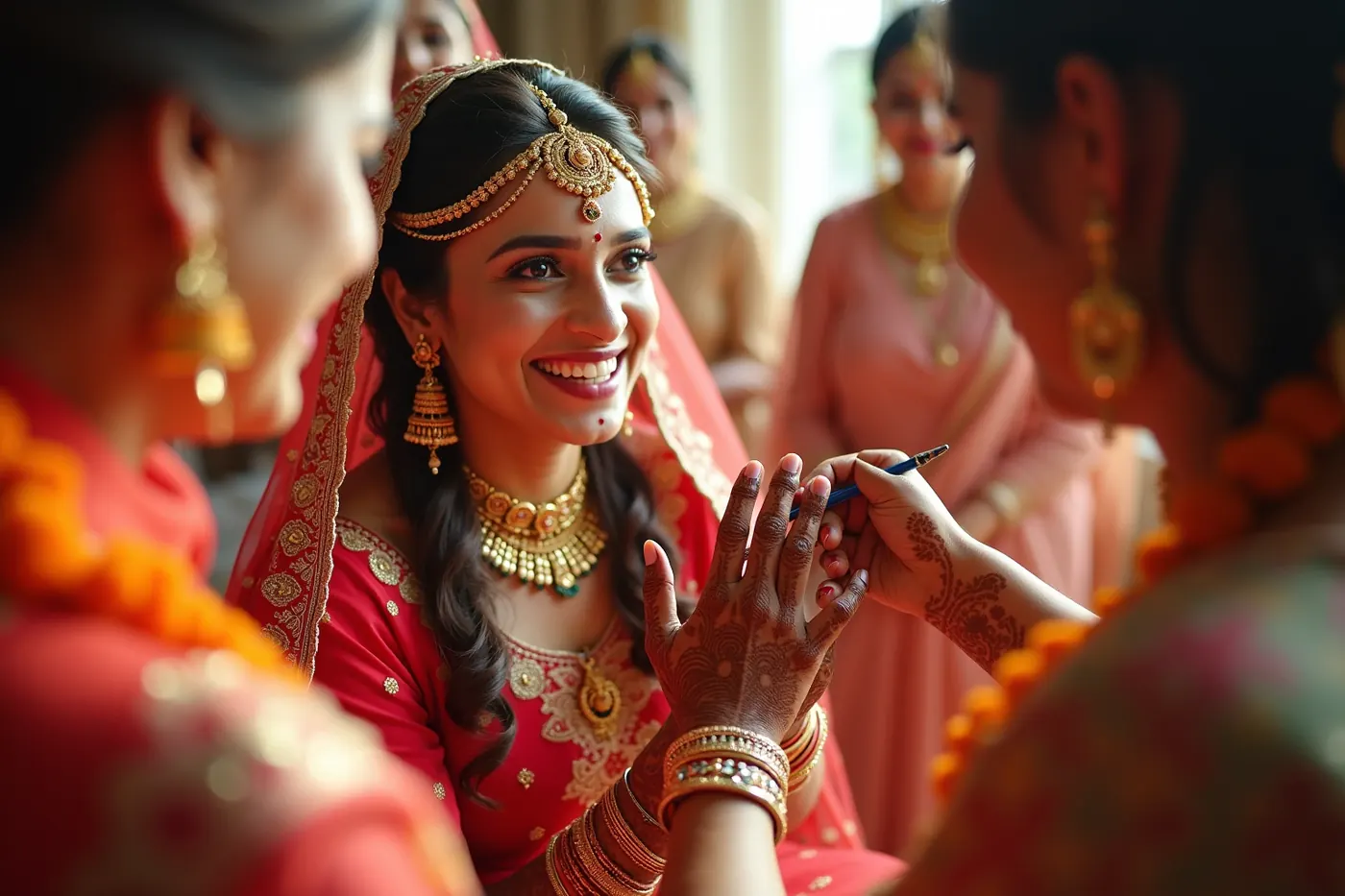
A mehndi is the calmest of the functions and the one most often shot badly, because the pace tempts a photographer into shooting only the henna. The henna matters, but a mehndi is several hours of the bride surrounded by the women of both families, and that is the actual story.
The technical problem is the hands. Detailed henna needs close, sharp, well-lit frames, and the bride's hands are usually held still in a badly lit corner while she talks to everyone. We light those frames properly rather than pushing the ISO and hoping.
Everything else is shot candidly across the room. Aunts arguing about the music, cousins photographing each other, the bride laughing at something said out of frame. Those are the images people look at in ten years.
Henna detail
Close, sharp and properly lit rather than shot at high ISO in a dim corner.
The room, not just the hands
Several hours of family around the bride, which is the part that dates well.
Both families
Mehndi is often the first function where both sides mix, and that is worth recording.
Colour handled deliberately
Marigold, mehndi green and the bride's outfit fight each other on camera unless white balance is managed.
Haldi photography
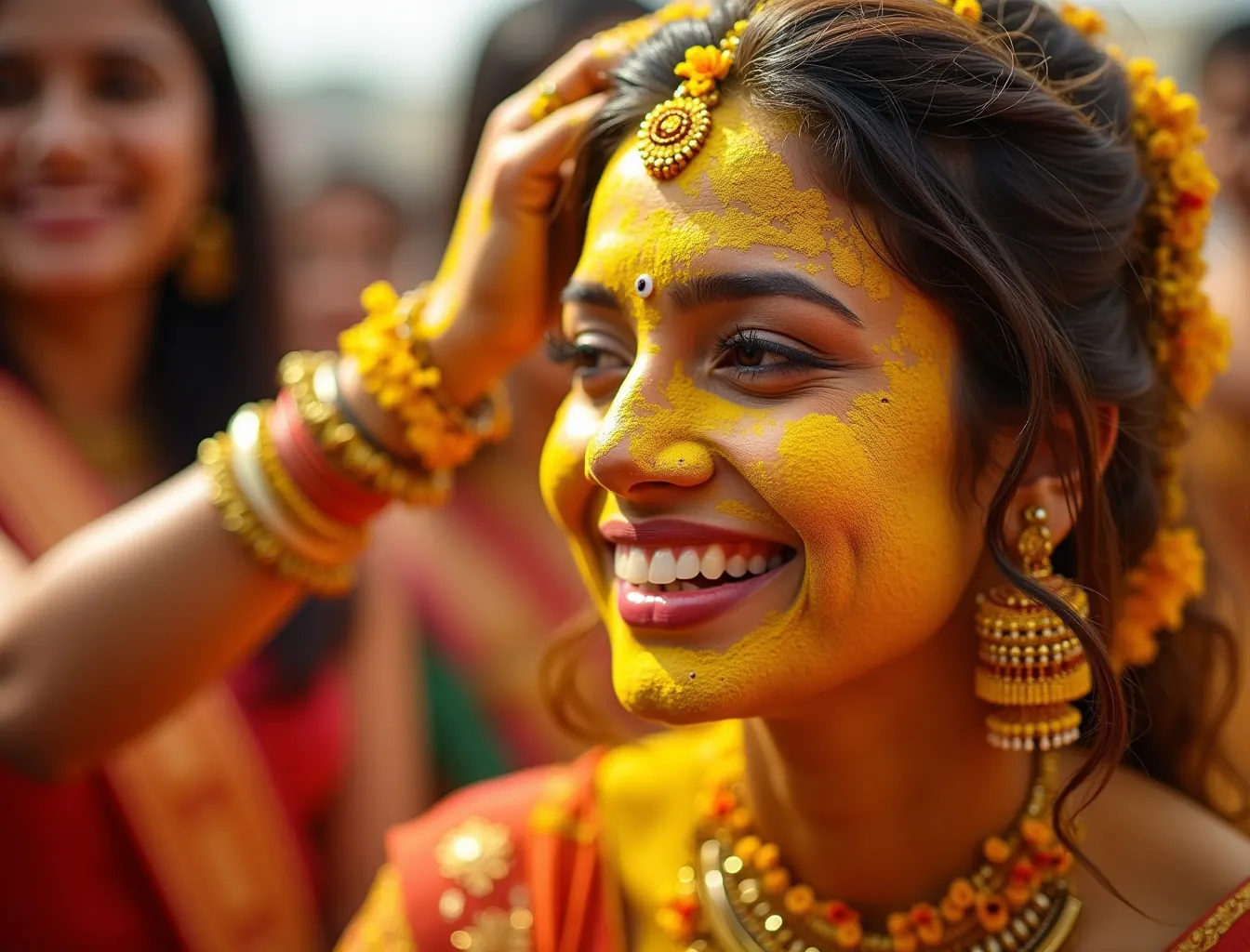
Haldi is the shortest and most physical of the functions. Turmeric goes everywhere, people are laughing and pushing, and the whole thing is often over in forty minutes. It is the function that rewards having two photographers more than any other.
The frames worth having are almost all reactions: the moment before the paste lands, the flinch, the laugh from whoever did it. Those happen simultaneously in different parts of the frame, which one camera cannot cover.
There is a practical dimension too. Turmeric and water destroy equipment, so we shoot haldi with weather-sealed bodies and protected lenses and we position accordingly. A photographer keeping their camera safe by standing back gets none of the good frames.
Two photographers minimum
The action and the reaction happen at the same moment in different places.
Anticipation, not reaction
By the time the paste lands the frame is gone. Coverage is positioned for what is about to happen.
Protected kit
Weather-sealed bodies so we can be close to the mess rather than safe at the edge of it.
Bright and messy is correct
Haldi should look like what it was. Over-polished haldi images always look wrong.
Sangeet photography and film
A sangeet is the function that most benefits from film as well as photographs, because the performances are choreographed and the audio matters. Photographs of a dance are static; a cut of the same performance with the music is what people rewatch.
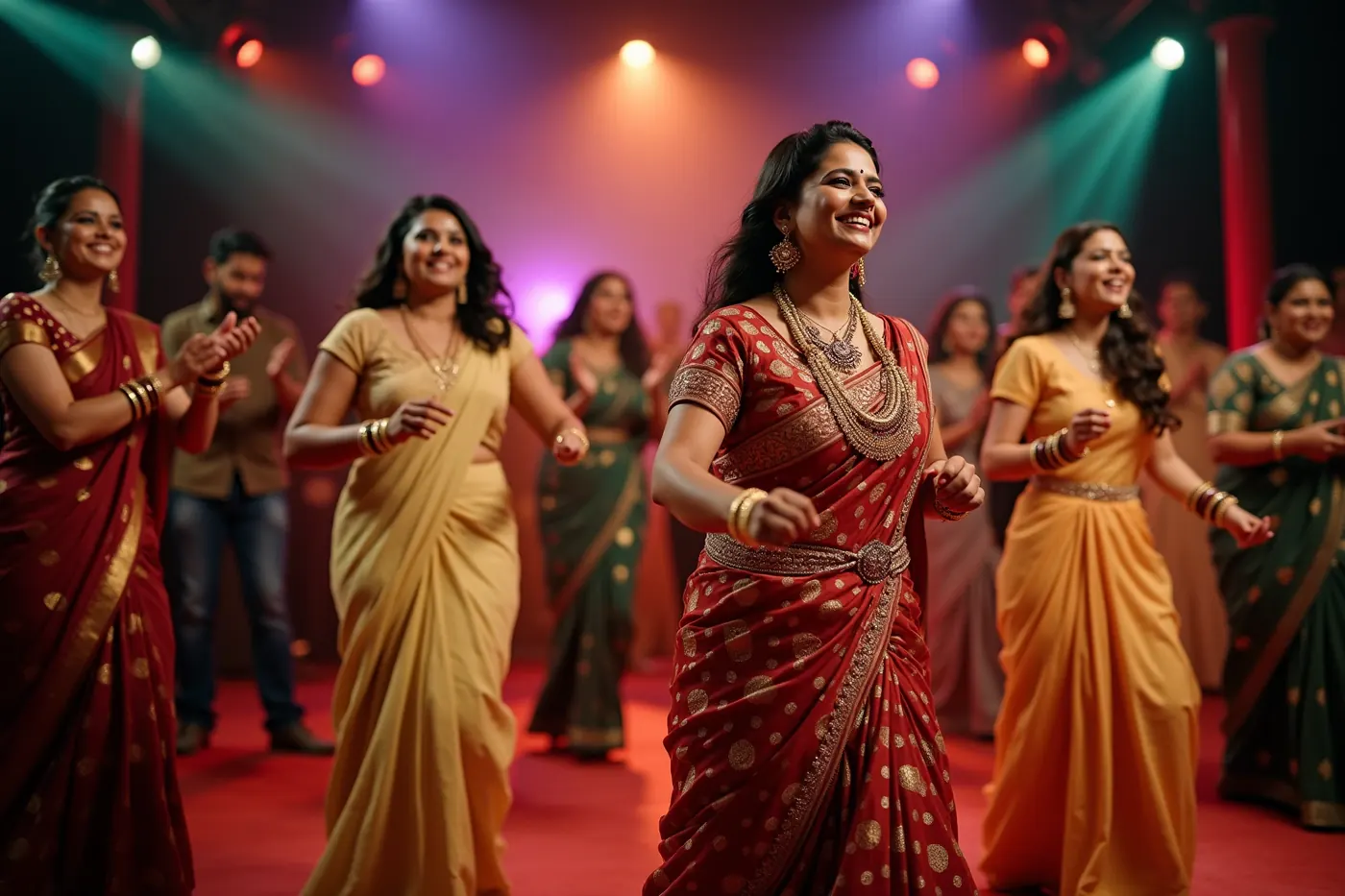
Stage lighting is the technical challenge. Coloured wash designed for an audience produces skin tones that swing between green and magenta on camera, and it changes every few seconds. We meter and white balance for the stage rather than the room, and we shoot the audience separately on different settings.
The reactions are the reason to have a second photographer facing the wrong way. Parents watching their children perform is the sangeet photograph that gets printed, and it is behind the camera that is pointed at the stage.
Film the performances
Choreographed dances with music are a moving-image subject. Stills alone under-serve them.
Stage and room metered separately
Coloured stage wash and ambient room light need different exposure and white balance.
Somebody facing the audience
The parents watching are usually the better photograph than the performance itself.
Rehearsal access helps
Ten minutes at the rehearsal tells us where each performance goes and where to stand.
Reception coverage
A reception is a receiving line with a party attached, and the two need different treatment. The line itself is repetitive by nature: hundreds of guests greeting the couple on a stage under fixed lighting, which produces hundreds of near-identical frames unless it is shot deliberately.
We cover the line efficiently, making sure every family group that comes up is photographed once properly, then spend the rest of the event on everything that is not the line. The entrance, the speeches, the first dance and the first hour of dancing are where a reception looks like an event rather than a queue.
Lighting a reception stage matters more than at any other function, because the background is usually a lit backdrop that will blow out or a dark hall that will swallow everyone. That is set up before guests arrive rather than adjusted while a queue waits.
The line, covered properly once
Every family group photographed once and well, rather than three hundred variations of the same frame.
Lighting set before doors
Stage and backdrop lighting tested before the first guest, not adjusted with a queue waiting.
The parts that are not the line
Entrance, speeches, first dance and the first hour of dancing.
A quiet ten minutes
Couple portraits away from the stage, which is often the only calm moment of the evening.
How many functions to cover
Cover the functions where your people are, not the ones a package tells you to. For most families that means mehndi, haldi, sangeet, the wedding and the reception, and each is quoted as its own day because that is what it is.
If the budget forces a choice, the two most commonly regretted omissions are haldi and sangeet. Haldi because it is the least formal and most joyful hour of the whole wedding, and sangeet because it is the only one where the family performs for each other.
The most commonly over-bought is the reception, particularly a large formal one. A receiving line is genuinely repetitive, and full coverage of the whole evening often produces fewer memorable images per hour than any other function.
Priced per function
Each is its own crew, its own day and its own edit rather than an add-on to the wedding.
Haldi is under-booked
The least formal, most joyful hour of the wedding, and the one people most often wish they had covered.
Sangeet is worth film
The only function where the family performs, and the only one where audio genuinely matters.
Reception is over-booked
A receiving line produces the fewest memorable frames per hour of any function.
Delivered as separate sets
Each function is edited and delivered as its own set rather than merged into one wedding gallery.
What you receive for each function
Every function is delivered as its own edited set rather than folded into a single wedding gallery. A mehndi album and a wedding album are different things and merging them means neither reads properly.
Expect two hundred to four hundred edited images per function depending on its length and how many people are there. Haldi is often the shortest and produces the fewest frames, and that is correct rather than a shortfall.
A preview set from each function goes out within a few days of it happening, which matters more here than for the wedding day. During a multi-day wedding people want to see the mehndi images before the reception, and a gallery that arrives three weeks later has missed the moment entirely.
Separate edited sets
One gallery per function, so each reads as its own event.
Two hundred to four hundred images
Per function, varying with length and guest count rather than with effort.
Fast previews
A preview from each function within a few days, because people want them during the wedding, not after it.
Sangeet film
Performances cut with audio, delivered separately from the photographs.
Checking availability for your date?
Tell us the date, the city and which functions you want covered. We reply within one business day with availability and what a package for it looks like.
What each function actually needs
The functions are not interchangeable. This is what each one demands in staffing and approach, and what it produces.
| Function | Crew needed | Main difficulty | Typical output |
|---|---|---|---|
| Mehndi | One or two photographers | Long, unstructured, changing afternoon light | Two to four hundred images, henna detail set |
| Haldi | Two photographers | Fast, wet, chaotic, forty minutes | Two to three hundred images, high reaction content |
| Sangeet | Two photographers plus cinematographer | Coloured stage lighting, audio matters | Three to four hundred images plus performance film |
| Wedding | Two to three photographers plus cinematographer | Long day, fixed ritual, venue restrictions | Six to nine hundred images plus film |
| Reception | Two photographers | Repetitive receiving line, difficult backdrop | Three to five hundred images |
Where we shoot
Flying Pixel Studio shoots across India and travels for destination weddings. Travel and accommodation for out-of-city work is quoted separately and agreed in writing before booking, so it never appears as a surprise line afterwards.
- Mumbai
- Delhi NCR
- Bengaluru
- Hyderabad
- Pune
- Ahmedabad
- Chennai
- Kolkata
- Jaipur
- Udaipur
- Goa
- Surat
Destination weddings shot in:
- Thailand
- Dubai
- United States
- United Kingdom
- Europe
- Australia
- Singapore
- Japan
FAQ
Mehndi, Haldi & Sangeet: questions couples actually ask
If your question is not here, ask it in the enquiry form and a surveyor will answer it.
Do you cover mehndi, haldi and sangeet separately?
Yes, each is quoted and staffed as its own day of coverage. They are different problems: a mehndi is long and unstructured, a haldi is fast and messy, and a sangeet is a stage performance under coloured light. Treating them as filler around the wedding day is how they end up under-covered.
How much does it cost to cover all the wedding functions?
Function coverage is part of the wedding package rather than priced item by item, and packages run from ₹2 lakh to ₹25 lakh. Each function is its own crew, day and edit, so four functions is roughly four times the work of one. Guest count and whether it is a destination wedding move the figure as much as the function count does.
Which functions are most worth covering?
Haldi and sangeet are the two most commonly regretted omissions. Haldi because it is the least formal and most joyful hour of the whole wedding, sangeet because it is the only function where your family performs for each other. If budget forces a choice, those two usually deliver more than extending reception coverage.
How many photographers do I need for a haldi?
Two, and this is the function where it matters most. The action and the reaction happen simultaneously in different parts of the room, and a haldi is often over in forty minutes. One photographer will capture either the paste being applied or the person laughing about it, not both.
How do you photograph a sangeet with coloured stage lighting?
Stage and room are metered and white balanced separately, because coloured wash designed for an audience swings skin tones between green and magenta on camera. We expose for the stage during performances and switch settings for the audience, which is where the better photographs usually are.
Should we film the sangeet as well as photograph it?
If you film one function, film the sangeet. The performances are choreographed and the music is part of them, so stills alone under-serve what actually happened. A photograph of a dance is static; a cut of the same performance with audio is the thing people rewatch years later.
How do you photograph the mehndi henna detail?
Lit properly rather than shot at high ISO in whatever corner the bride is sitting in. Detailed henna needs close, sharp, well-exposed frames, and the bride's hands are usually held still in poor light. We bring light to those frames specifically, then shoot everything else in the room candidly.
How many photos do we get per function?
Two hundred to four hundred edited images per function, varying with how long it runs and how many people are there. Haldi often produces the fewest because it is the shortest, and that is the correct outcome rather than a shortfall. Each function is delivered as its own edited set.
Will the functions be delivered separately or as one gallery?
Separately. A mehndi set and a wedding set are different things, and merging them into one gallery means neither reads properly. Each function gets its own edited set, and a preview from each goes out within a few days of it happening rather than after the whole wedding.
How to photograph a wedding reception well?
Cover the receiving line efficiently and properly once per family group, then spend the rest of the evening on everything that is not the line. Set the stage and backdrop lighting before guests arrive rather than adjusting it with a queue waiting. The entrance, speeches, first dance and first hour of dancing are where a reception looks like an event.
Is the receiving line worth full coverage?
It needs covering but rarely justifies the whole evening. A line produces hundreds of near-identical frames by its nature. We photograph every family group once and well, then move to the parts of the reception that produce different images. Full-evening line coverage is the most commonly over-bought thing in wedding photography.
Can one team cover functions on consecutive days?
Yes, and it is the normal arrangement. Continuity helps: by the third function we know your families, we know who matters, and we know where the light is at that venue. It is also more efficient than engaging different crews, because nothing has to be explained twice.
What if two functions happen at the same time?
That needs two crews, and it is more common than people expect at large weddings where the bride's and groom's sides run parallel functions. Tell us at quoting stage rather than the week before, because it changes the staffing plan rather than just the schedule.
Do you need access to the rehearsal?
For a sangeet, ten minutes at the rehearsal is genuinely useful. It tells us the order of performances, where each one moves on stage, and where we need to stand. Without it the first thirty seconds of every performance is spent working out where it is going, and that is where the best frames usually are.
Is a drone allowed at the functions?
It depends on the venue and the airspace. Many hotels and banquet halls prohibit drones indoors or over guests regardless of permissions, and some cities have airspace restrictions that rule it out entirely. We check the venue rules and the airspace before promising aerial coverage rather than turning up hoping.
How do you handle very low light at evening functions?
Fast lenses and available light wherever possible, with off-camera light introduced where the room genuinely cannot support it. Direct on-camera flash is avoided because it flattens the room and tells everyone they are being photographed, which changes their behaviour and ends the candid coverage.
Can you photograph functions at home rather than a venue?
Yes, and home functions are often the best ones. The rooms are smaller and the light is harder, so it needs a photographer comfortable working close in tight spaces, but the images are usually more personal than anything shot in a banquet hall. We walk the house beforehand where we can.
What do you need from us before the functions?
The schedule with realistic timings, venue addresses, a list of family members who must be photographed, and a note on anything the venue restricts. For a sangeet, the running order of performances. A short call a week before covers all of it and is the difference between a crew that anticipates and one that follows.
How quickly do we get the function photos?
A preview set from each function within a few days of it happening, which matters more here than for the wedding day. During a multi-day wedding people want the mehndi images before the reception. The full edited set for each function follows on the delivery date written into your agreement.
Can we add a function after booking?
Usually yes, subject to crew availability on that date. Adding a function is adding a day of coverage and a day of editing, so it is quoted rather than absorbed. Tell us as early as you can, because during peak season the crew you want may already be committed elsewhere on that date.
Other things we cover
- Wedding Photography Candid coverage and a cinematic film of the whole wedding, from one crew.
- Pre-Wedding Shoot A planned shoot on a location that suits the two of you, not a template.
- Maternity & Newborn Calm sessions worked around the baby, at home or in the studio.
- Aerial & Drone Film Aerial footage flown by certified pilots, cut into the same film.