Aerial & Drone Film
Aerial videography and drone photography for events
Aerial footage flown by certified pilots, cut into the same film.
In short
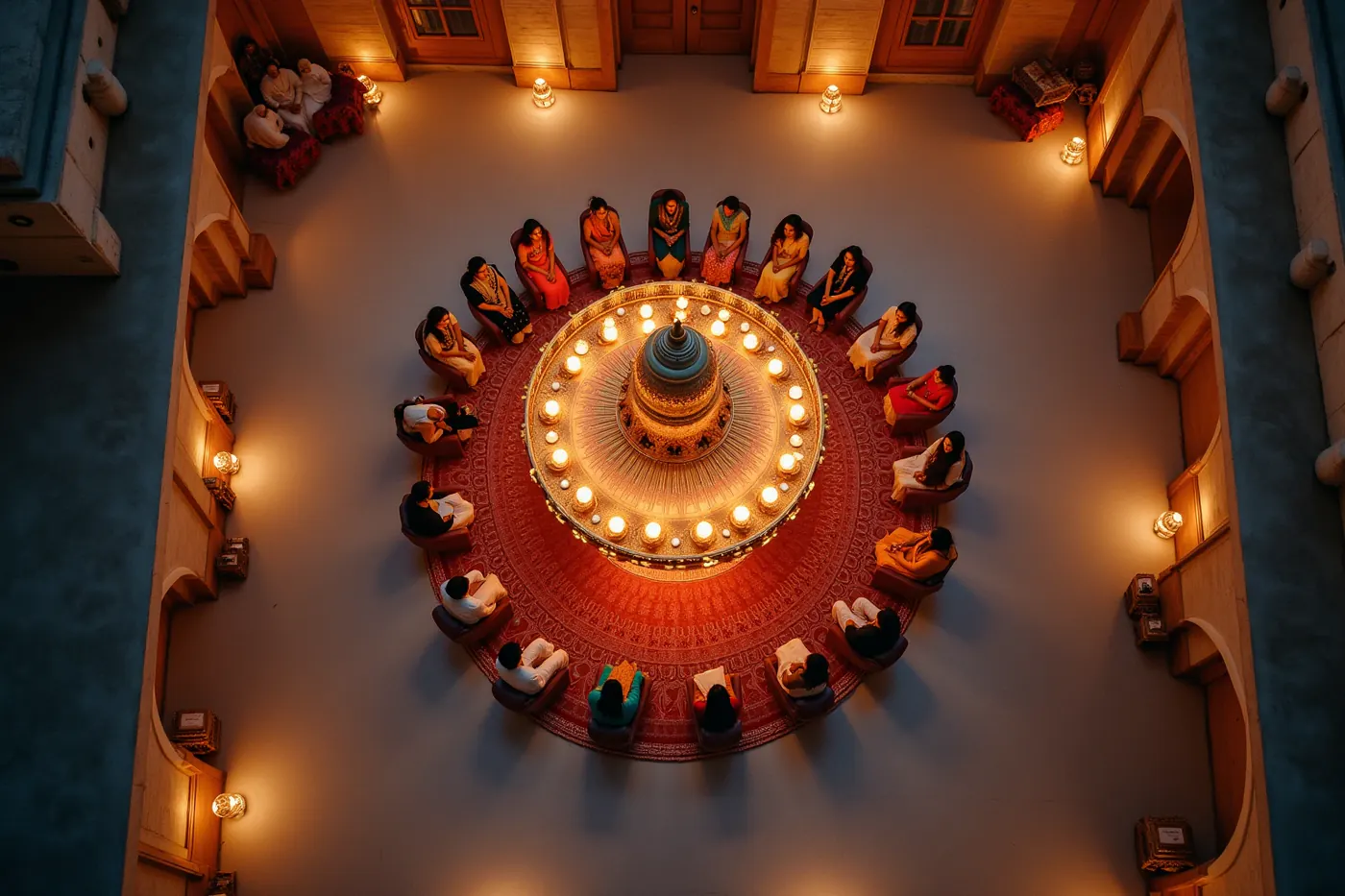
Aerial footage gives a wedding film the establishing shots a ground camera cannot reach: the venue at scale, the baraat arriving, the mandap from above. Flying Pixel Studio flies with DGCA-certified pilots and handles venue and airspace permission beforehand, then grades the aerial footage into the same film as the ground coverage.
Aerial coverage is the one part of a wedding film that people notice immediately and that most crews get wrong, usually because it was added on the day rather than planned. This page covers what it adds, what the law actually requires in India, and when it is not worth doing.
What aerial footage actually adds to a wedding film
Three things a ground camera cannot give you: scale, geography and arrival. A wedding film cut entirely from eye level never shows how big the venue was, how the spaces related to each other, or what four hundred people arriving actually looked like.
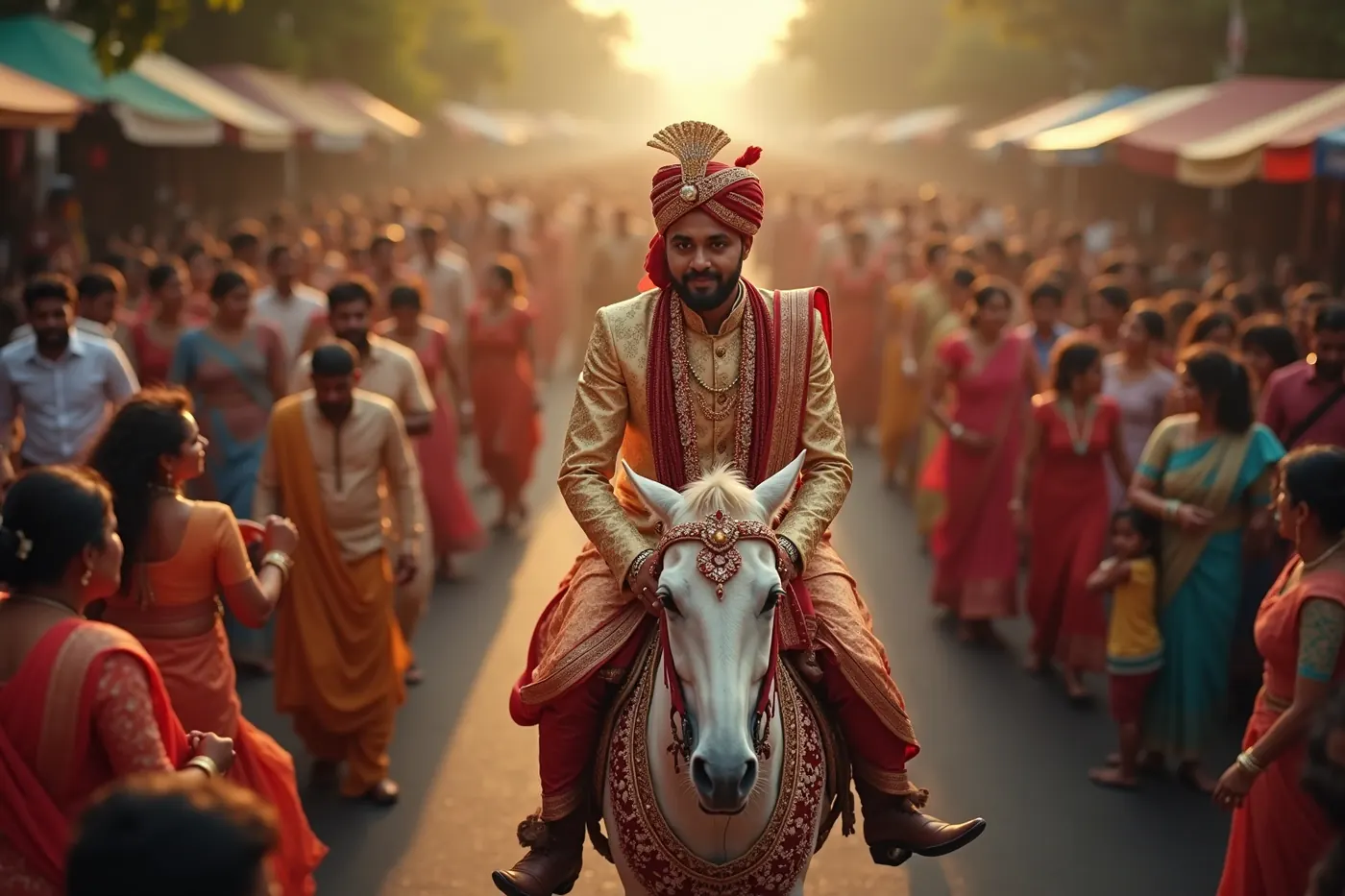
The baraat is the clearest example. From the ground it is a crowd. From sixty metres it is a procession moving through a landscape towards a building, which is what it felt like to be in it.
The mistake is treating aerial as a separate deliverable. Aerial footage that arrives as its own two-minute drone reel is decoration. Aerial footage graded to match the ground cameras and cut into the same film is structure, and it is the only version worth paying for.
Establishing the venue
The shot that tells a viewer where they are before the film shows them anything close up.
The baraat
A procession reads as a procession from above and as a crowd from the ground.
Mandap from overhead
The symmetry of a decorated mandap only exists as a shape when seen from above.
Graded to match
Cut into the same film as the ground coverage, not delivered as a separate drone reel.
Is drone photography legal in India
Yes, for a certified pilot flying a registered aircraft within the rules. Commercial drone operation in India is governed by the Drone Rules administered by the DGCA, which set out pilot certification, aircraft registration and where flight is permitted.
Airspace is divided into zones, and a great many wedding venues sit inside restricted areas without anyone realising. Anything close to an airport is the obvious case, but government buildings, military installations and some heritage sites also carry restrictions that are not visible from the venue.
Venue rules are separate from and additional to airspace rules. A hotel can prohibit drones on its property even where the airspace is clear, and many do, particularly indoors or over seated guests. Both permissions have to exist before a flight is promised.
Certified pilot
Commercial flight requires a certified remote pilot. Flying Pixel's pilots are DGCA-certified.
Registered aircraft
The drone itself must be registered, and the registration is checkable.
Airspace zone
Checked per venue before booking. Proximity to airports and government sites is the usual blocker.
Venue permission
Separate from airspace. Many hotels prohibit drones on their property regardless of clearance.
Both, in writing
We confirm both before promising aerial coverage rather than turning up hopeful.
When aerial coverage is not worth it
Indoors, almost always. A drone flown inside a banquet hall is loud, dangerous over seated guests and produces footage a gimbal on a slider would have produced better and more safely. Anyone offering indoor drone coverage as standard is selling the equipment rather than the result.
At small weddings. Under about a hundred guests in a compact venue, aerial footage shows a small group of people from far away, which is the opposite of what a small wedding film should feel like.
In genuinely restricted airspace. Some venues simply cannot be flown, and the honest answer is to say so at quoting stage rather than to take the booking and explain on the day. We check first and tell you if the answer is no.
Indoors
Loud, unsafe over guests, and outperformed by a gimbal. Not offered as standard.
Small weddings
Under about a hundred guests, aerial makes an intimate wedding look sparse.
Restricted airspace
Some venues cannot be flown. We check and say so before you book rather than after.
Bad weather
Wind above the aircraft's limit or rain grounds the flight. Ground coverage continues regardless.
How aerial coverage is planned and flown
The airspace and venue check happens at quoting stage, not on the day. That gives us time to secure permission where it is needed and to tell you early if aerial is not possible, so you are not paying for something that cannot happen.
On the day the flight is planned around the programme rather than fitted into gaps. The baraat, the entrance and the mandap each have a window, and each window is short. A pilot who is still finding a launch point when the baraat starts has missed it.
Safety is a working constraint rather than paperwork. We fly with a spotter as well as a pilot, we do not fly directly over seated guests, and we have a defined abort. If conditions change mid-flight, the aircraft comes down and the ground coverage carries the film.
Checked at quoting stage
Airspace and venue confirmed before booking, so a no is known early.
Launch point agreed
Identified on a venue walk, clear of guests, parking and power lines.
Pilot plus spotter
Two people. The pilot flies, the spotter watches the aircraft and the crowd.
Never over seated guests
Flight paths avoid crowds rather than passing over them at height.
Defined abort
Wind, rain or an unexpected obstruction brings the aircraft down. Ground coverage is never dependent on it.
What you receive
Aerial footage is delivered inside the wedding film rather than beside it. That means colour graded to match the ground cameras, cut to the same timeline, and used where it serves the story rather than dropped in because it exists.
You also receive a set of aerial stills, which are genuinely different photographs rather than frame grabs from video. A mandap from directly above and a venue at dusk are images that only exist from the air, and they print well at large sizes.
Where you want it, a short aerial-led edit for sharing is cut separately. That is the piece that performs on social, and it is a different edit from the film, not a trimmed version of it.
Graded into the film
Matched to the ground cameras and cut on the same timeline.
Aerial stills
Photographs taken as photographs, not frames pulled from video.
Short social edit
An aerial-led cut for sharing, edited separately from the main film.
Raw footage on request
The capture is yours if you want it for archive.
Aerial video and drone light shows are different things
This confuses a lot of couples, and the confusion is expensive. Aerial videography is one aircraft with a camera, filming your wedding. A drone light show is a swarm of many aircraft carrying lights, performing a choreographed display for your guests to watch.
They share almost nothing operationally. Aerial video is a crew addition to your film. A drone show is a separate production with its own design phase, its own permissions, its own safety perimeter and its own team, and it is priced accordingly.
If someone quotes you a single figure for aerial coverage and a drone show without separating them, ask which they are actually providing. It is the most common source of misunderstanding in this part of the market.
Aerial videography
One camera aircraft filming your wedding, cut into the wedding film.
Drone light show
A swarm of lit aircraft performing a display for your guests to watch.
Different permissions
A show needs a safety perimeter, crowd management and a longer approval lead time.
Different budgets
A show is a production. Aerial video is a crew addition. They are not comparable.
Destination and outdoor venues
Aerial coverage works best at exactly the venues people choose for destination weddings: palace courtyards, beach resorts, hill properties and forts. Open sky, distinctive architecture and landscape are what aerial footage is for.
International destinations need longer lead time, because the rules differ by country and equipment sometimes has to be declared at customs. Some countries require a local licensed operator regardless of your pilot's certification, and we arrange that rather than risking an aircraft being seized.
The practical planning point is the same everywhere: tell us the venue at quoting stage. A palace in Udaipur, a beach in Goa and a hotel ballroom in central Mumbai produce three completely different answers about what is possible.
Open outdoor venues
Palaces, beaches, hill properties and forts are what aerial coverage is for.
Longer international lead time
Rules differ by country and some require a local licensed operator.
Customs and equipment
Drone equipment sometimes has to be declared. Arranged in advance rather than discovered at the airport.
Venue named early
The answer about what is possible changes completely with the venue.
Checking availability for your date?
Tell us the date, the city and which functions you want covered. We reply within one business day with availability and what a package for it looks like.
Aerial video, aerial stills and a drone show
These three get quoted against each other constantly and they are not alternatives. This is what each one actually is.
| Aerial video | Aerial stills | Drone light show | |
|---|---|---|---|
| What it is | One camera aircraft filming | One aircraft shooting photographs | A swarm of lit aircraft performing |
| Who sees it | Viewers of your film afterwards | Viewers of your album afterwards | Your guests, live, on the night |
| Crew | Pilot plus spotter | Pilot plus spotter | A show team, plus safety marshals |
| Lead time | Checked at quoting stage | Checked at quoting stage | Weeks, for design and permissions |
| Indoors | No | No | No |
| Delivered as | Cut into the wedding film | Photographs in the album | A live performance, filmed separately |
Where we shoot
Flying Pixel Studio shoots across India and travels for destination weddings. Travel and accommodation for out-of-city work is quoted separately and agreed in writing before booking, so it never appears as a surprise line afterwards.
- Mumbai
- Delhi NCR
- Bengaluru
- Hyderabad
- Pune
- Ahmedabad
- Chennai
- Kolkata
- Jaipur
- Udaipur
- Goa
- Surat
Destination weddings shot in:
- Thailand
- Dubai
- United States
- United Kingdom
- Europe
- Australia
- Singapore
- Japan
FAQ
Aerial & Drone Film: questions couples actually ask
If your question is not here, ask it in the enquiry form and a surveyor will answer it.
Is drone photography legal in India?
Yes, for a certified pilot flying a registered aircraft within the rules. Commercial operation is governed by the Drone Rules administered by the DGCA, covering pilot certification, aircraft registration and permitted airspace. Flying Pixel's pilots are DGCA-certified, and we confirm both airspace and venue permission before promising coverage.
Do you need permission to fly a drone at a wedding venue?
Two separate permissions, and both are needed. Airspace clearance depends on where the venue sits relative to airports, government buildings and other restricted zones. Venue permission is separate: a hotel can prohibit drones on its property even where the airspace is clear, and many do. We check both at quoting stage.
How much does drone wedding photography cost in India?
Aerial coverage for a wedding is built into the package rather than sold as a bolt-on, because the drones and the pilot are part of the same crew. Wedding packages run from ₹2 lakh to ₹25 lakh, and adding aerial moves the figure through crew and permission work rather than through a separate line. A drone light show is a different product entirely.
What is the difference between aerial videography and a drone show?
Aerial videography is one aircraft with a camera filming your wedding, cut into your wedding film. A drone light show is a swarm of many lit aircraft performing a choreographed display for guests to watch live. They share almost nothing operationally and are priced completely differently.
Can you fly a drone indoors at a banquet hall?
We do not, and we would advise against anyone who offers it as standard. Indoor flight is loud, unsafe over seated guests, and produces footage that a gimbal on a slider would produce better and more safely. Indoor aerial is almost always someone selling the equipment rather than the result.
What drones do wedding photographers use?
Compact professional camera drones with stabilised gimbals and cameras capable of matching the ground cameras in colour and frame rate. The specific model matters far less than whether the pilot is certified, the aircraft registered, and the footage graded to match the rest of the film rather than delivered as a separate reel.
Will the aerial footage match the rest of our film?
Yes, and this is the part most often done badly. Aerial footage is colour graded to match the ground cameras and cut on the same timeline, so it reads as part of the film. Aerial delivered as its own two-minute drone reel is decoration rather than structure, and we do not work that way.
When is aerial coverage not worth it?
Indoors, at small weddings under about a hundred guests in a compact venue, and in restricted airspace. At a small wedding, aerial shows a small group of people from far away, which is the opposite of what an intimate wedding film should feel like. We will tell you if your wedding is one of these.
What happens if the weather stops the drone flying?
Ground coverage continues unaffected, because the film is never dependent on the aerial. Wind above the aircraft's limit or rain grounds the flight, and that call is made on safety rather than optimism. Where aerial was booked and could not fly at all, that portion is not charged.
Do you fly over the guests?
No. Flight paths are planned to avoid crowds rather than to pass over them at height, and we fly with a spotter as well as a pilot so somebody is watching the aircraft and the crowd at all times. There is also a defined abort if conditions or the crowd change.
How long does it take to get aerial permission?
For most venues, days rather than weeks, which is why we check at quoting stage. Restricted zones take longer and some are simply refused. International destinations need the longest lead time, because rules differ by country and some require a local licensed operator regardless of your pilot's certification.
Can you shoot aerial at a destination wedding abroad?
Yes, with more lead time. Rules differ by country, equipment sometimes has to be declared at customs, and several countries require a locally licensed operator. We arrange that in advance rather than risking equipment being held at the airport, which is why we ask for the venue as early as possible.
Do we get the aerial photos as well as video?
Yes, as photographs taken as photographs rather than frames pulled from video. A mandap from directly overhead and a venue at dusk are images that only exist from the air, and shot properly they print well at large sizes. Frame grabs from video do not.
Which parts of the wedding are worth shooting from the air?
The baraat, the venue establishing shots, the mandap from overhead, and any outdoor function with scale to it. Each has a short window, which is why the flight is planned against the programme rather than fitted into gaps. A pilot still finding a launch point when the baraat starts has missed it.
Is the drone noisy during the ceremony?
It is audible, which is why we do not fly close during quiet ritual moments. Aerial is shot during the parts of the day where it does not intrude: arrivals, establishing shots and outdoor movement. Anyone flying low over a ceremony for the shot is prioritising their footage over your wedding.
Can you add aerial coverage after we have booked?
Usually yes, subject to the airspace and venue check coming back clear and to pilot availability on the date. Because both permissions have to be confirmed, adding it late is riskier than including it from the start, and there are venues where a late addition simply is not possible.
Do you provide the raw aerial footage?
On request, and at no extra cost. The capture is yours. Most couples work from the edited film, because raw aerial footage is long, ungraded and unstabilised in places, which makes it hard to use directly. If you want it for your own archive or for a future edit, ask and it is provided.
Who is actually flying the drone at our wedding?
A DGCA-certified pilot from our own crew, with a spotter alongside. We do not subcontract the flying, which matters because the person operating an aircraft near your guests should be someone we are accountable for. The pilot's certification is available on request.
Can aerial footage be used for the reception screen?
Yes, and it works well for it. A short aerial-led edit is cut separately from the wedding film specifically for screen and social use, because the pacing that works on a phone is different from the pacing that works in a film somebody sits down to watch.
What if our venue turns out to be in restricted airspace?
We tell you at quoting stage rather than on the day, and aerial simply is not included. What we will not do is take the booking, keep the fee, and explain the problem when we arrive. Where the venue is borderline we apply for permission and confirm the outcome before you commit.
Other things we cover
- Wedding Photography Candid coverage and a cinematic film of the whole wedding, from one crew.
- Pre-Wedding Shoot A planned shoot on a location that suits the two of you, not a template.
- Mehndi, Haldi & Sangeet Full coverage of the functions, not just the wedding day itself.
- Maternity & Newborn Calm sessions worked around the baby, at home or in the studio.